What the Hallway Remembered: Photographing a Family Home Before the Keys Change Hands
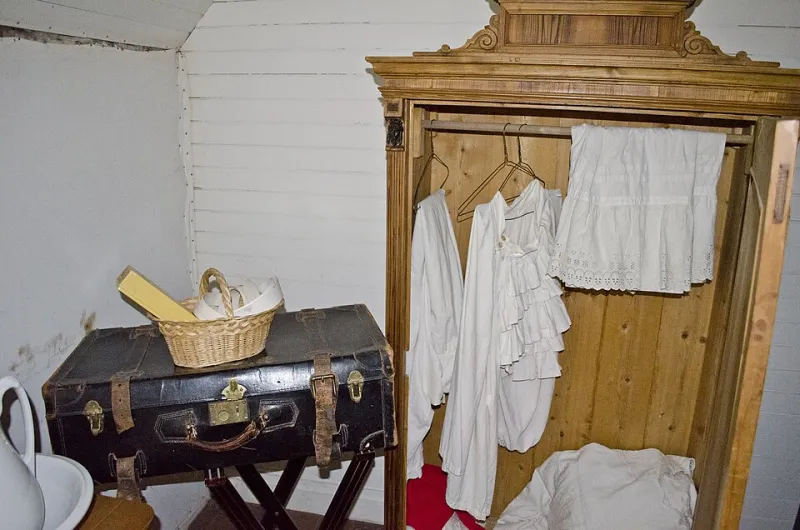
Photo: Tim Evanson, CC BY-SA 2.0, via Wikimedia Commons
Most of us will do it at some point: empty a parent's house, or hand over the one we raised our own children in. It arrives with a solicitor's letter and a completion date and about four weeks of sorting, and somewhere in the middle of it somebody usually says, out loud, 'I wish I'd taken photos of it as it was.'
That sentence is why I started photographing houses.
The first time it happened properly, a woman in her forties rang me about her mum's bungalow. Not a portrait of her mum — she was clear about that, and her mum wasn't well enough for a portrait anyway. She wanted the house. The chair by the window. The cupboard where the good glasses lived. The garden she'd helped plant in 1994. We had a Tuesday morning and a set of keys, and by the Friday the clearance van had been and gone.
Why the estate agent's pictures are not the ones you'll keep
Estate agent photography is honest work with a completely different job. It flattens, brightens, declutters, hides the boiler, hides the bins, hides the life. The whole point is to make a house look like nobody has ever lived in it, so that a stranger can picture themselves there.
Which is the exact opposite of what a family wants. You don't want your childhood home to look like a listing. You want it to look like Tuesday afternoon in 1998, with the shoe rack overflowing and the hall light on because it's been on since the morning.
So this is not a property shoot. It's a documentary one, made for the people who have to say goodbye to the building, not the people buying it.
What to record: a short list
You'll think you'll remember. You'll remember the big things — the kitchen, the garden, the front room. It's the rest that goes: the texture of a place, the bits your body knew without your brain noticing.
- The hallway floor, and the exact place the paint has worn thin.
- The door frame with the pencil height marks, and the year written next to each one in biro.
- The back of the kitchen door — the reason there was never a proper coat hook.
- The view you saw every day from the kitchen sink.
- The garden gate, the path, the shed door with its particular sag.
- The airing cupboard, the boiler, the phone in the hall, the tiles in the bathroom nobody chose.
- The front of the house from across the road, at the time of day you always came home.
Write that list before you're exhausted. Add to it every time you notice something you'd assumed was permanent.
Photographing a place without people in it
It's a different discipline from photographing people, and a lot of it is about not tidying up.
Don't restage. A cleared kitchen looks like a show home and reads as nothing. Leave the mug where the mug lives.
Use the light that's already there. British houses are small and north-facing and full of soft grey rooms, and that grey is fine — it's what the rooms actually felt like on a wet Wednesday. Flash turns a memory into a survey.
Work at two heights. Standing, because that's what you saw when you walked in the door. And lower — child height, or seated at the table — because some of the pictures are for the version of you who was four foot tall in that hall.
Most of it should be close. One wide frame per room to hold the shape, then details: the handle, the notch, the crack, the mark on the wall where a picture hung for thirty years and left a pale square. Those close frames do the heavy lifting.
And wait. Stand still for two minutes in each empty room before you press anything. Half the job is noticing what you'd have walked past.
Why the grown-up children ask for the hallway
In twelve years I have never had anyone ask for more formal family photographs after a bereavement. They ask for the stair carpet. They ask for the greenhouse. They ask for a picture of the front door with the number on it, because they can't quite believe a number can be so specific to a person.
Formal portraits tell you what a family looked like on a chosen afternoon. A house tells you how a family lived, which is a longer and stranger and more useful thing to know. The height marks on a door frame are a portrait of a childhood. A worn patch of lino by the phone is a portrait of forty years of somebody standing there.
It's also, quietly, a way of coping. On the day the keys get handed over, you can't do anything about the loss. But you can have a record. There's some comfort in that — a small, solid, factual comfort, like a photograph of a hand.
Doing it before, not after
The house you photograph has to be the house, not the version between clearing and completion. Do it before the skip arrives. If there's time, do it before the sale is even agreed, when it's still full of somebody and slightly chaotic and the shed still smells of the shed.
Take an hour. Take two. Walk the same route you walked as a child — in the back door, through the kitchen, up the stairs — and photograph it in that order, so the set has a rhythm to it when you look back through.
One last thing. When you leave, lock up, and then stand outside for a minute rather than getting straight in the car. That minute is worth having, and it's worth having a camera in your hand for. Not for the picture. For the habit of noticing.