On the Other Side of the Lens: Notes From My Own Wedding Day
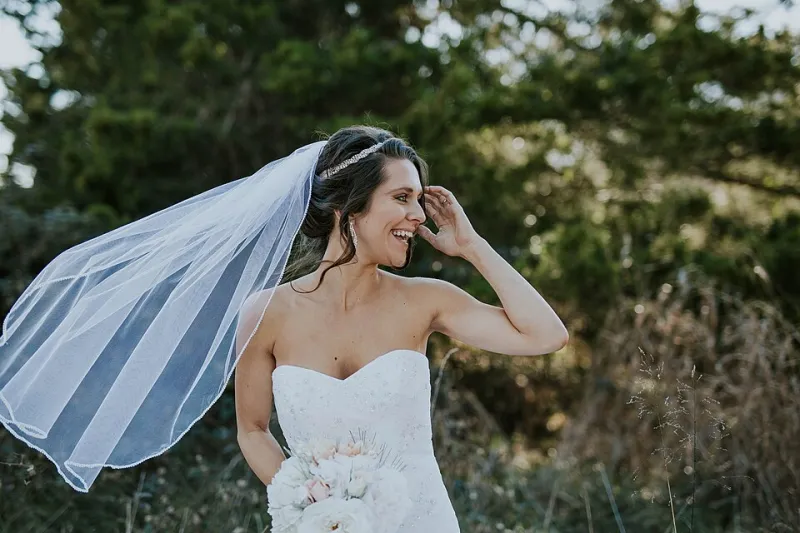
Photo: Brooke Cagle brookecagle, CC0, via Wikimedia Commons
For eleven years I've been the person behind the camera at other people's weddings. I know the rhythm of a wedding day the way a conductor knows a symphony: the odd, floaty lull after the ceremony, the frantic hour before the meal, the flat patch around eight o'clock when everyone has eaten and nobody has started dancing yet. I could photograph a wedding in my sleep.
This summer I got married. I turned up to a wedding with nothing to do but be in it. No bag of lenses, no mental shot list, no quiet panic about whether the rings were still in my pocket. Just a dress, a pair of shoes I'd regret by ten, and a set of nerves I genuinely hadn't expected.
The morning my hands stopped working
Nobody tells you that nerves are physical. I've watched a hundred brides get ready and thought, vaguely, that they looked a bit jittery. I did not understand that the jitter lives in your fingers, your jaw, the backs of your knees.
I couldn't do a hairpin. My sister did it, undid it, did it again. My mum ironed a shirt that had already been ironed. Somebody made a pot of tea that nobody drank. The whole morning had the texture of a held breath.
The thing is, it wasn't unpleasant. It was just enormous. And it taught me something I've been trying to explain to couples ever since: you can't smooth the nerves out of a wedding day, and honestly you shouldn't try. They're evidence. They're the receipt that says this mattered to you.
What you notice when you're not working
Without a shot list running in my head, I noticed the wrong things. The smell of the iron. My dad practising standing up and sitting down again. The way the room was three degrees too warm and everyone was pretending it wasn't.
I noticed my mum's hands on the back of a chair. I noticed my oldest friend arrive and hover in the doorway because she didn't want to interrupt. I noticed the registrar's pen, which was a cheap biro and, for some reason, made me want to cry.
When I'm working, I notice light and geometry and whether the confetti is about to blow into someone's eye. When I wasn't working, I noticed people. That's the whole job, really, and it took standing on the other side of the lens to feel the difference in my body.
The photographs I didn't know were being taken
We booked a photographer I'd admired for years, which is a strange thing to do when it's your own trade. I made a deliberate decision not to direct her. I gave her a list of six names — the people who absolutely had to be in a picture — and then I let go.
The best frame from our day is one I had no idea existed until the gallery landed. I'm standing in a doorway mid-laugh, head tipped back, holding a glass of something I never finished. My skirt is hitched up in one hand. I look like a person, not a bride.
If I'd been the photographer at my own wedding, I'd have chased the obvious frames. The kiss. The confetti. The group of us on the steps. Those are there, and I love them. But the one on our hallway wall is the one I'd never have thought to take.
What couples actually need from a photographer
Not more images. Permission.
What I needed that day — and what I now try to give — was someone who knew when to disappear. Someone who could read a room and see that a grandmother needed a chair and four quiet minutes before the speeches. Someone who would say, without drama, eat something, you'll be useless by five. Someone calm enough that their calm leaked into everyone else.
I also needed her to know the names. Not just mine and my husband's, but the names of the people who'd travelled, the ones who'd cried, the ones who'd been ill and made it anyway. Being seen by name is half of being photographed well.
Handing over the controls
The hardest part wasn't the vows. It was sitting in the car on the way over, realising there was nothing to check, nothing to fix, nothing to hold on to.
I'm a fixer. Most photographers are. We like being the person who knows where the spare pins are. Letting go of that felt like standing on a ledge. And then, about halfway through the afternoon, it became the nicest part of the whole day. Somebody else was watching. I got to just be watched.
What's on the wall now
There are four prints up in our house. None of them are the ones I'd have chosen in advance. There's my nan with her hand on my cheek, caught mid-sentence. There's my husband's face in the second before he turned round at the altar. There's a blurry one of our friends running across a wet lawn because it had started to rain.
I spent eleven years making pictures for other people. I'd like to think I understood what they were for. Then I stood in front of someone else's camera, hands shaking, hair not quite right, and understood it properly for the first time.
The pictures aren't for the day. They're for the thirteenth of November, years later, when you've forgotten the nerves and you need reminding that you were once this brave.