A Pint and a Rewritten Speech: Why the Night Before Belongs in Your Wedding Album
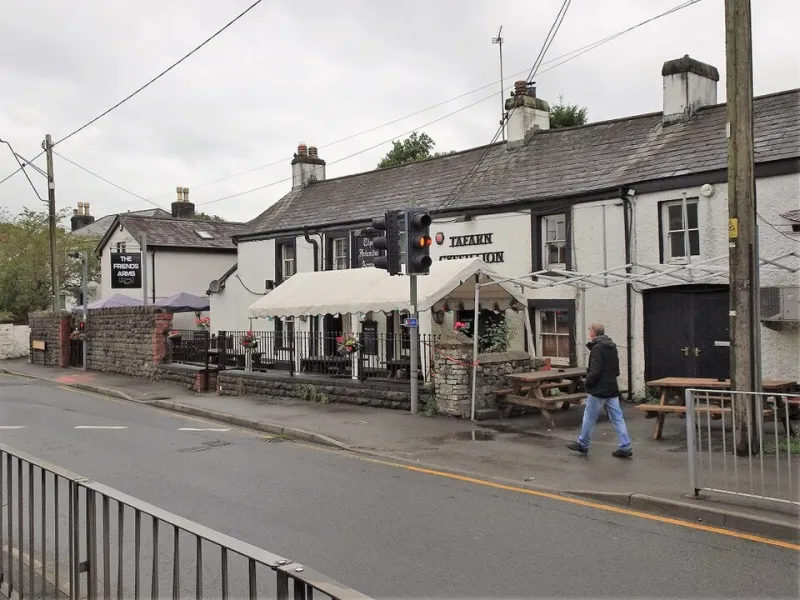
Photo: Sionk, CC BY-SA 4.0, via Wikimedia Commons
Ask anyone about their wedding photographs and they'll describe the day itself. The getting ready, the vows, the meal, the first dance, the bit where an uncle took over the DJ booth. Ask them about the night before and you'll usually get a smile and a slightly chaotic story involving a pub, a printer that wouldn't work, and someone crying in a beer garden.
That night belongs in the album. It just rarely gets photographed.
The table by the window
There's a specific scene that plays out in pubs across the country on the Friday night before a Saturday wedding. Nine or ten people around two pushed-together tables. A folder of papers. Someone's phone open on the speech, being read aloud for the fourth time. A pint that's been nursed for an hour because the person holding it is too nervous to drink.
It's not glamorous. The lighting is usually dreadful and the carpet is usually patterned. And it is, without question, one of the most honest scenes of the entire wedding weekend.
The photographs from that table look like nothing else in the gallery. They're close, warm, unglamorous. Someone's head thrown back laughing. A hand on a shoulder. Three people leaning over one phone screen, all pulling different faces at whatever the best man has just written.
The speech gets rewritten at ten
Speeches are often finalised in public, on a Thursday or Friday evening, surrounded by the people they're about to be delivered to. It's a terrible idea and a wonderful thing to photograph.
I've watched a father of the bride cross out and rewrite the same paragraph four times, then abandon the paper and just talk it through to the table. I've seen a best man write an entire speech on the notes app of his phone while a friend fed him chips. I've seen a groom read his vows aloud in a beer garden to precisely one witness, then fold the paper and put it in his coat pocket, which he then wore for the next eighteen hours.
Those pieces of paper are artefacts. One day they'll be in a box somewhere, and there'll be a photograph of the moment they were still only half-written.
The quiet one in the corner
The night before is also where the nerves show. Not the photogenic, hands-over-face nerves of the morning — the other kind. The person sitting slightly outside the circle. The groom who's gone very still. The mother of the bride who keeps checking that everyone's got a drink.
These frames are unbelievably valuable. They're the ones that, twenty years on, will remind a couple that everyone in that room was invested. That the day didn't just happen to them. That a whole group of people held their breath alongside them.
Photographs of people being brave are usually more moving than photographs of people being happy.
Why it belongs in the story
The wedding album, done properly, isn't a record of a party. It's a record of a turning point. And a turning point has a before.
A gallery that runs from Friday evening to Saturday night has an arc. You see the nerves and then you see them dissolve. You see the speech as a messy set of crossed-out notes and then as words actually being said, out loud, into a microphone, with someone's voice going at the end.
Without the night before, the wedding day arrives fully formed. With it, you get to see how it was built.
How to do it without making it a production
A few thoughts if you're considering this.
Keep it small. An hour, maybe two, at most. This isn't a second wedding shoot. It's a short, quiet recording of a real evening.
Stay in the room, but not at the table. The best frames come from being genuinely unobtrusive — sitting at the bar, near the door, letting the evening happen around you. No flash bouncing off the windows unless absolutely necessary.
Expect nothing and get everything. The night before is unpromising on paper: a pub, some paperwork, tired people. It is almost always better than expected. Someone will cry. Someone will produce a photo from 2004. Someone will order far too much food.
Talk about it in advance. Not with the whole table — that kills the atmosphere instantly — but with whoever's organising. Check the pub's happy about photographs. Check nobody at that table has a reason to avoid the camera.
Ask for the paper. At the end of the evening, if there's a speech in a coat pocket, photograph it on the table before it goes away. That's the last time it'll ever look like that.
The last pint
The night before ends quietly. Usually three people left, chairs up on the tables, someone saying right, early night then at half eleven with absolutely no conviction.
I've photographed that last bit more than once — coats going on, a hug on the pavement, the pub windows glowing behind everyone. It's the frame that makes the next morning's photographs make sense.
You don't need a photographer for the whole evening. You need somebody there for one pint's worth of it, quietly, so that the story of your wedding starts the way it actually started: in a pub, with the wrong notes, and the right people.