The Chairs Are Stacked, the Cake Is Cut: Why the Wedding's Last Hour Belongs in Your Album
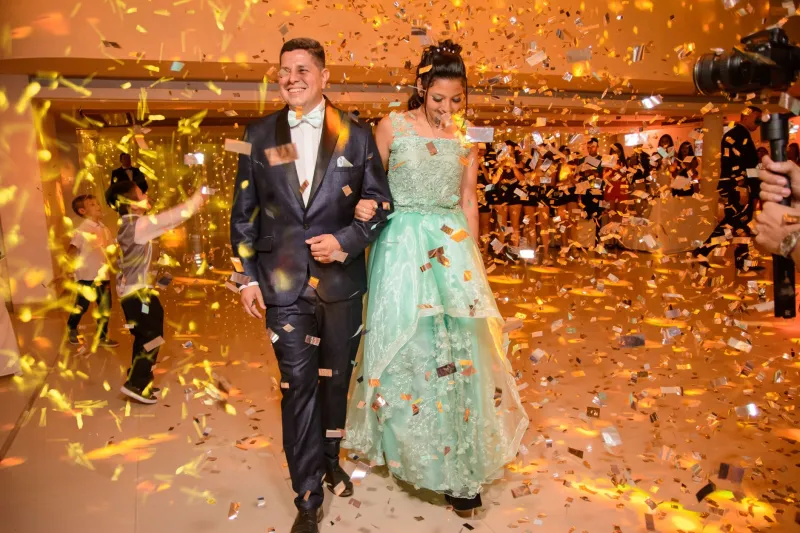
It's 11:47pm. The DJ is playing one last song for the bar staff. Someone's dad is folding a tablecloth badly. The bride is barefoot with a glass of water, and the groom is carrying three gift bags and a box of cake. The confetti that looked so romantic at 3pm is now a colourful mess in the corner, and the venue manager is hovering with a clipboard. This is not the part most couples put on the mood board. It is, very often, the part that feels most like them.
The bit nobody plans for
Wedding planning tends to focus on the ceremony, the speeches, the first dance and the golden-hour portraits. The last hour is left to chance. There is no schedule for the moment the band packs up, the guests drift towards taxis, and the room starts to empty. That lack of choreography is exactly why it matters. By midnight, most people have stopped performing. The smiles are tired, the shoes are off, and the conversation is quieter. You are no longer photographing a wedding day as an event. You are photographing two people at the end of a very long, very full day, beginning the ordinary work of getting home together.
What's actually happening at midnight
Look around a wedding venue at the end of the night and you'll find a strange, honest still life. Hired chairs are stacked in towers. The cake has been cut into uneven slices and half-eaten. Cards are stuffed into a carrier bag. Someone's nan is asleep in the corner with her handbag on her lap. The couple are negotiating who carries what. A member of staff is sweeping up confetti with the enthusiasm of someone who has done it a hundred times before. None of this is glamorous. All of it is evidence. The stacked chairs are evidence that people came. The half-eaten cake is evidence that they ate. The confetti on the floor is evidence of joy, even if it now looks like litter.
Why these photographs matter
A wedding album that ends with the first dance can feel like a film that stops before the credits. The last hour gives the story its texture. It shows the couple as a team, not just as a bride and groom. It shows the people who stayed to help, the venue staff who made it happen, and the small, unglamorous acts of care that hold a day together. It also shows the beginning of something. The wedding is over. The marriage is starting, and it starts with someone holding a bin bag while the other looks for the car keys.
How to photograph it without making it a thing
The first rule is simple: ask. Not every couple wants a photographer hovering at midnight, and not every venue allows it. A quick conversation before the day — or even a text in the afternoon — is enough. Something like: I can stay for the last half hour if you'd like the cleanup and the quiet bits. No pressure. If they say yes, stay. If they say no, go home.
Once you're there, the approach is the same as any good documentary photography: be quiet, be useful, and don't direct. Put the flash away if you can. Available light — the venue's last lamps, a phone torch, the strip light in the corridor — often suits the mood better. Photograph hands and details as much as faces. A hand holding a bin bag, a tie undone, a pair of heels on a chair, the cake box on the passenger seat. These are the frames that will bring the day back later.
Help if it's needed. Hold a door. Carry a box. Then pick up the camera again. People relax around a photographer who has just made themselves useful. Keep your distance. A longer lens or simply standing back lets the moment happen. Look for small exchanges: a laugh between the couple as they realise how much stuff they've accumulated, a quiet word with the venue manager, the last dance with the bar staff. Those are the photographs that don't feel like photographs.
The frames you'll actually want
The shoes in hand. The groom's tie loose around his neck. The card box being taped shut. The table plan taken down and rolled up. The couple walking to the car with bags and a bouquet that has seen better days. The empty room, still lit, with chairs stacked and confetti swept into a pile. If there is a final dance with the staff, photograph it. If there is a last slice of cake eaten standing up, photograph that too. And if the couple simply want to sit down for five minutes in the quiet, let them. That photograph might be the best one of the night.
A note on ending well
The last hour is not an excuse to overstay. A good wedding photographer knows when to put the camera down. If the couple are exhausted, say goodnight. If the venue is closing, pack up. The most honest final photograph might be the one you don't take. The point is not to prove you were there until the end. The point is to give the couple a record of the part they will otherwise forget: the bit after the last dance, when the day finally became theirs again.
Weddings don't end when the band stops. They end when the couple lock the door or get into the taxi. Those frames are worth having. Not because they're pretty, but because they're true.