The Place They'd Have Stood: Photographing a Wedding Gently When Someone Is Gone
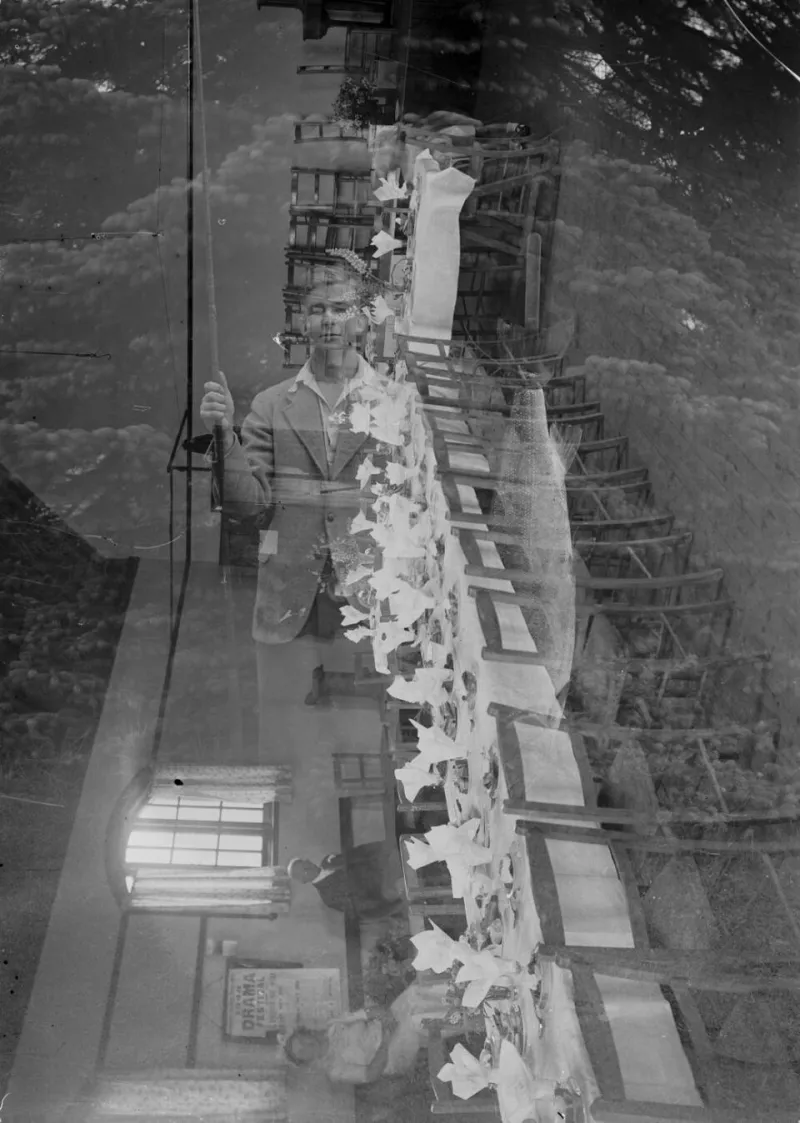
Photo: Percy Benzie Abery, CC0, via Wikimedia Commons
There's a particular kind of quiet that turns up at a wedding when someone who should be there isn't. It's not the hush before the ceremony, and it's not the lull while the speeches are being checked. It's the pause in the getting-ready room when a mum reaches for a necklace that belonged to her own mother. It's the empty chair at the top table that nobody quite knows whether to fill. It's the song that comes on during the evening do and half the room looks at the floor for a second.
I photograph a lot of UK weddings — registry offices, village halls, marquees in a field, church ceremonies with confetti stuck to the pavement outside. And I've learned that an absent person doesn't need to be hidden. They also don't need to be turned into a theme. The trick is to photograph them the way you'd talk about them in real life: briefly, warmly, and without making the whole day about the fact they're gone.
A place setting, not a shrine
Some couples save a seat. Some leave a place at the table with a photograph propped against a glass. Some don't do anything visible at all, because the absence is carried privately. All of those are valid.
What I try to do is photograph the gesture, not the grief. A saved place setting with a worn photograph in a little frame is a beautiful frame — but only if it's lit softly and taken without ceremony. I'll wait until the room has moved on, when the chair is slightly pushed back and the napkin is a bit crumpled and the photograph is catching the window light. That's the honest version. It says: someone was remembered here. It doesn't say: this wedding is sad.
If you're planning a visible tribute, tell me where it'll be and what it means. I won't ask you to pose next to it. I won't ask you to smile at an empty chair. But I will make sure it's in the story, quietly, the way it's in the room.
The saved dance and the half-second pause
The first dance is the obvious place to look for an absent person, and it's also the easiest place to get it wrong. I'm not going to ask you to dance with a photograph. I'm not going to stage a dramatic look to camera. Instead, I watch for the half-second pause — the moment one of you looks at the floor, or at a sibling, or at the ceiling, as if checking that someone is still there. That frame often ends up being the one couples keep.
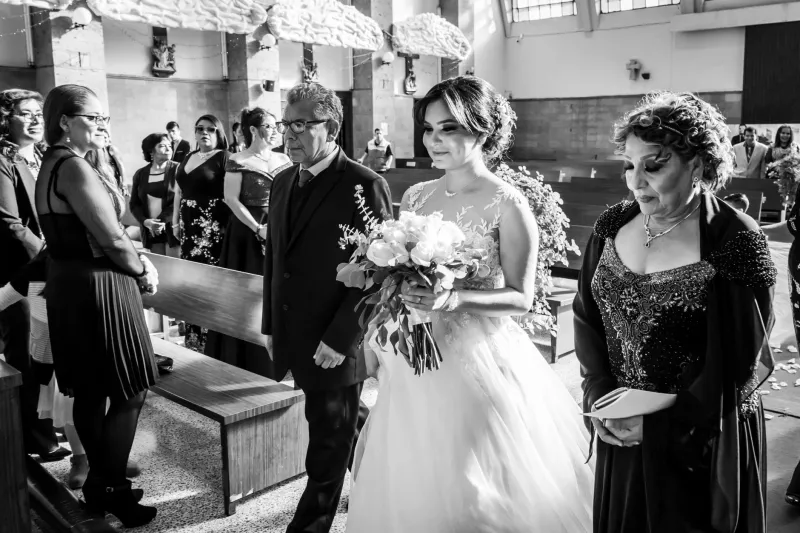
The same goes for the father-daughter dance, or the mother-son dance, or the bit where a best friend would normally have made a speech. If someone else steps in — an uncle, a godmother, a mate who's known you since Year 7 — that's not a replacement. It's a stand-in, and it's worth photographing as its own thing. A hand on a shoulder. A laugh that's a bit too loud. A look that says: I know, I'm here.
Photographs that don't need a face
You don't always need a picture of the person to make a picture about them. Sometimes the most honest frame is the thing they left behind: a locket worn under a dress, a folded photograph in a jacket pocket, a tie pin, a recipe card tucked into the order of service, a bottle of their favourite beer on the bar with a paper straw in it because that's what they'd have done.
I photographed one wedding where the bride had her late dad's watch on her wrist. We didn't do a close-up of the watch with a caption. I just caught it when she was adjusting her sleeve before the ceremony. It's a tiny detail, barely in focus, and she told me afterwards it was the most important picture of the day.
That's the kind of frame I mean. It doesn't announce itself. It just holds the person without putting them on display.
Briefing me (and being honest)
The most useful thing you can do is tell me the truth before the day, not during it. Send me a message or have a quick call. Tell me who's missing, what they meant to you, and what you do or don't want. 'I don't want to talk about it on the day' is a perfectly good brief. So is 'I'd like one quiet photo of the saved seat, and then please leave it alone.'
If there's a song, a reading, a toast, or a particular moment where the absence will land hardest, tell me. I'll be ready, and I'll be discreet. I won't manufacture grief, and I won't ask you to perform it. But I will pay attention.
And if you change your mind on the day — if you suddenly want a photo of the two of you holding a photograph of them, or you want me to step outside while you have a moment — that's fine. The best wedding photography is flexible. It has to be.
Leave room for the joy
The day is still a wedding. It can hold sadness and sausage rolls at the same time. It can have a saved place setting and a chaotic dance floor. It can have a quiet toast and a conga. The absence doesn't cancel the joy; it just gives it a shadow, and that shadow is part of the picture.
So I'll photograph the empty chair if you've saved one. I'll photograph the worn photograph on the card table. I'll photograph the saved dance, the half-second pause, the watch on the wrist, the mate who steps in. And then I'll photograph the confetti in your hair and the way your mum laughs with her head back. That's not disrespectful. That's a full life. That's the whole point.
If you're planning a wedding in 2026 and someone won't be there, you don't need a special plan. You just need a photographer who'll listen, stay quiet when it matters, and know when to look away. I can do that.